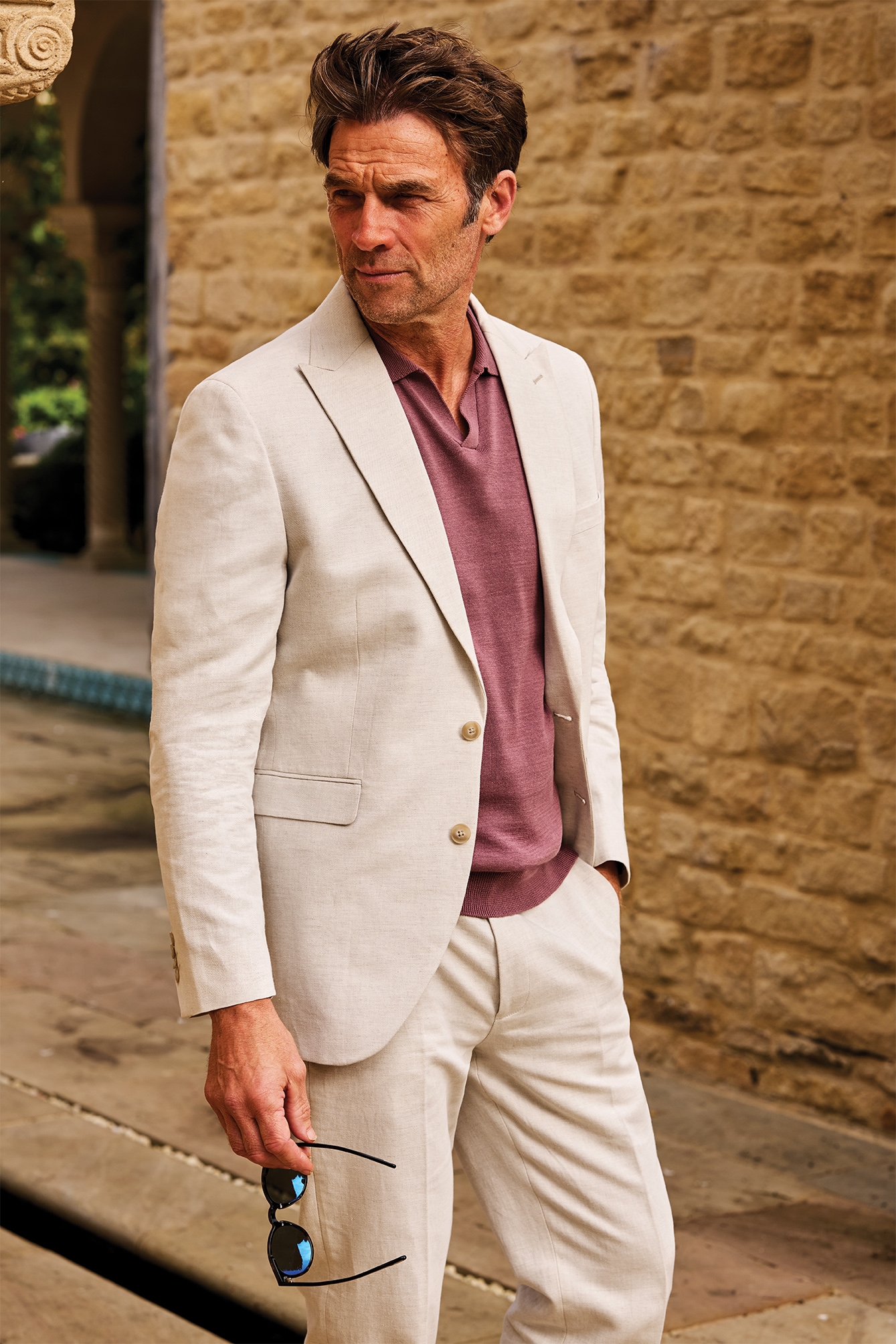
Choosing a wedding suit for a British summer is not as simple as grabbing the first navy jacket you see. One day it is soft sunshine and a light breeze, the next it is a heatwave with sticky pavements and packed marquees. When you are in that suit from midday photos to midnight dancing, comfort matters just as much as style.
Summer weddings now stretch from late spring to early autumn, with ceremonies in gardens, city registry offices, country houses and everything in between. You might be under a glass roof at noon, then on a crowded dance floor at night. The challenge is to respect the dress code, keep your look sharp and still feel fresh when the temperatures climb.
At Brook Taverner, we focus on classic tailoring that works in real British weather. With breathable fabrics, smart cuts and relaxed options, we aim to keep you looking composed instead of flushed and wilting in every wedding photo.
Choosing the Right Wedding Suit for British Summer Heat
When the sun comes out, fabric is the first thing to think about. Some cloths trap heat, others let your skin breathe and move.
Good warm-weather choices include:
• Lightweight wool
• Wool and linen blends
• Pure linen
• Seersucker
• Cotton-rich mixes
Lightweight wool often surprises people. It feels smooth, drapes well and holds its shape, yet it can be cooler than heavy cotton. Wool and linen blends soften the look and feel while keeping better crease resistance than pure linen. Linen gives that relaxed, slightly rumpled finish, great for laid-back venues. Seersucker and cotton blends sit in the middle, smart but easy to wear.
Colour makes a big difference too. In the sun, deep charcoal can feel heavy, while lighter tones look fresher and reflect more heat. Try:
• Light or mid blues
• Stone and sand shades
• Soft grey
• Gentle pastel tones, like dusty blue or sage
You can still respect a traditional dress code. A mid blue or light grey wedding suit is perfectly at home in a church or city venue, and feels more seasonal than dark winter tones.
Fit is the last part of the comfort puzzle. A well-fitted suit actually feels cooler than one that is too tight or too loose.
• A jacket with a bit of room through the chest so air can move
• Trousers that skim the leg without gripping the thigh
• Unstructured or softly tailored shoulders
• Half linings rather than full, where the cloth allows
This kind of cut lets air flow and stops fabric clinging when you warm up.
Formal, Relaxed, or Beachfront: Matching the Venue
Different UK wedding spots call for different levels of dress. The trick is to match your wedding suit to the setting and the wording on the invitation.
For a traditional church or grand country house, a three-piece suit usually feels right. A waistcoat helps you look put together when you remove the jacket later. Think:
• Lightweight wool three-piece in navy, blue or soft grey
• Polished leather shoes, not too chunky
• Classic white or pale blue shirt
For barns, tipis or marquee receptions in fields, you can relax a step. A two-piece suit is often enough, with a waistcoat as an option if the couple likes a smart look. Linen blends or lighter colours work well here.
City venues, like stylish hotels or registry offices, suit something sharp and modern. A slim but comfortable two-piece in mid blue or grey, clean lines and maybe a subtle pattern, such as a fine check, feels right.
Coastal or destination style weddings invite lighter fabrics and colours. A linen or cotton-rich suit in stone, light blue or soft grey fits the mood, and you can lean into separates if the dress code allows.
Dress code wording helps guide your choice:
• Black tie optional: dark suit, white shirt, simple tie, polished shoes
• Cocktail: two-piece in a mid tone, tie or smart open neck, neat pocket square
• Smart casual: separates, such as tailored trousers and a blazer, open neck shirt
• Informal: linen or cotton suit, or blazer and chinos, still neat and pressed
Fabrics, Layers and Details That Keep You Cool
Not all light fabrics feel the same once you are in the sun. Breathability, how the cloth handles moisture and how easily it creases all play a part.
Lightweight wool has fine fibres that help move moisture away from the skin. In humid British heat, this can feel cooler than pure linen, which can cling when damp. Linen comes into its own in dry warmth, giving airflow and an easy feel. Linen blends give you some of that coolness with fewer deep creases.
Layering needs thought for long wedding days:
• Wear the waistcoat for the ceremony and formal photos
• Remove your jacket first at the reception, then the waistcoat later if needed
• Choose a light cotton or linen shirt so each layer breathes
• If you use an undershirt, keep it very thin and close-fitting
Details inside the suit also matter. Partial or buggy linings, where the back is mostly unlined, stop heat building up. Open weave cloths allow tiny gaps for air without looking casual. Side vents in the jacket help movement and comfort when sitting at the wedding breakfast.
Accessories are easy ways to stay cool:
• Pocket square instead of a heavy, tight knot if the dress code allows
• Lightweight leather belt or side adjusters on the trousers
• Fine cotton or wool-blend socks, not thick sports styles
• Unlined loafers or flexible brogues for better airflow
Styling Your Look for the Ceremony and Beyond
Your shirt choice makes a big difference to comfort and style. Traditional weaves like poplin and twill sit smooth against the skin and work well under a suit. Oxford has a bit more texture and suits slightly more relaxed weddings. Linen and cotton blend shirts are great in the heat, but for formal services, a crisp cotton usually feels smarter.
For colour, you can keep it simple:
• White for maximum formality and contrast
• Pale blue for a softer, flattering look
• Soft stripes or micro patterns for interest at relaxed venues
Ties, bow ties and pocket squares bring the outfit together. Silk is classic for weddings, with a gentle sheen that looks good in photos. Knitted ties and linen textures feel more laid back but still smart. Aim for coordination, not a perfect match, between tie and pocket square. Avoid very shiny or novelty designs, as they can distract from an otherwise sharp suit.
Comfort does not stop with the suit. Breathable underwear, thin but supportive, helps you stay cool. A discreet, light undershirt can reduce sweat marks if you run warm. For grooming, choose lightweight products so your skin does not look heavy or shiny in photos. Keeping a small comb or brush handy, plus a clean handkerchief in your inside pocket, can save you as the day goes on.
Build Your Summer Wedding Wardrobe with Confidence
Planning ahead makes summer wedding dressing much easier. Start by checking what you already own. Do you have a suit that feels comfortable in warm weather and looks right for both weddings and other summer events, such as race days or business occasions? If not, it may be time to add one.
A simple, flexible wardrobe might include:
• One core summer suit in a breathable cloth and versatile colour
• A second pair of tailored trousers in a lighter or darker shade
• A breathable blazer that works with chinos or smart jeans
• A rotation of light shirts in white, blue and a subtle pattern
• Two or three ties plus pocket squares to change the mood
At Brook Taverner Ltd, we build our menswear around British tailoring heritage with fabrics and cuts chosen for real life, from Yorkshire offices to seaside weddings. Whether you visit us in store or explore our range online, the aim is the same, to help you feel prepared, comfortable and well dressed for every summer wedding on your calendar.
Find Your Perfect Wedding Suit With Confidence
Let Brook Taverner Ltd. help you look your best on the big day with a finely tailored wedding suit that reflects your personal style. Explore our collection to find cuts, fabrics and colours that complement your wedding theme and fit beautifully. If you would like guidance on sizing, styling or coordination for your wedding party, please contact us and we will be happy to assist.